How do porta potties work day to day?
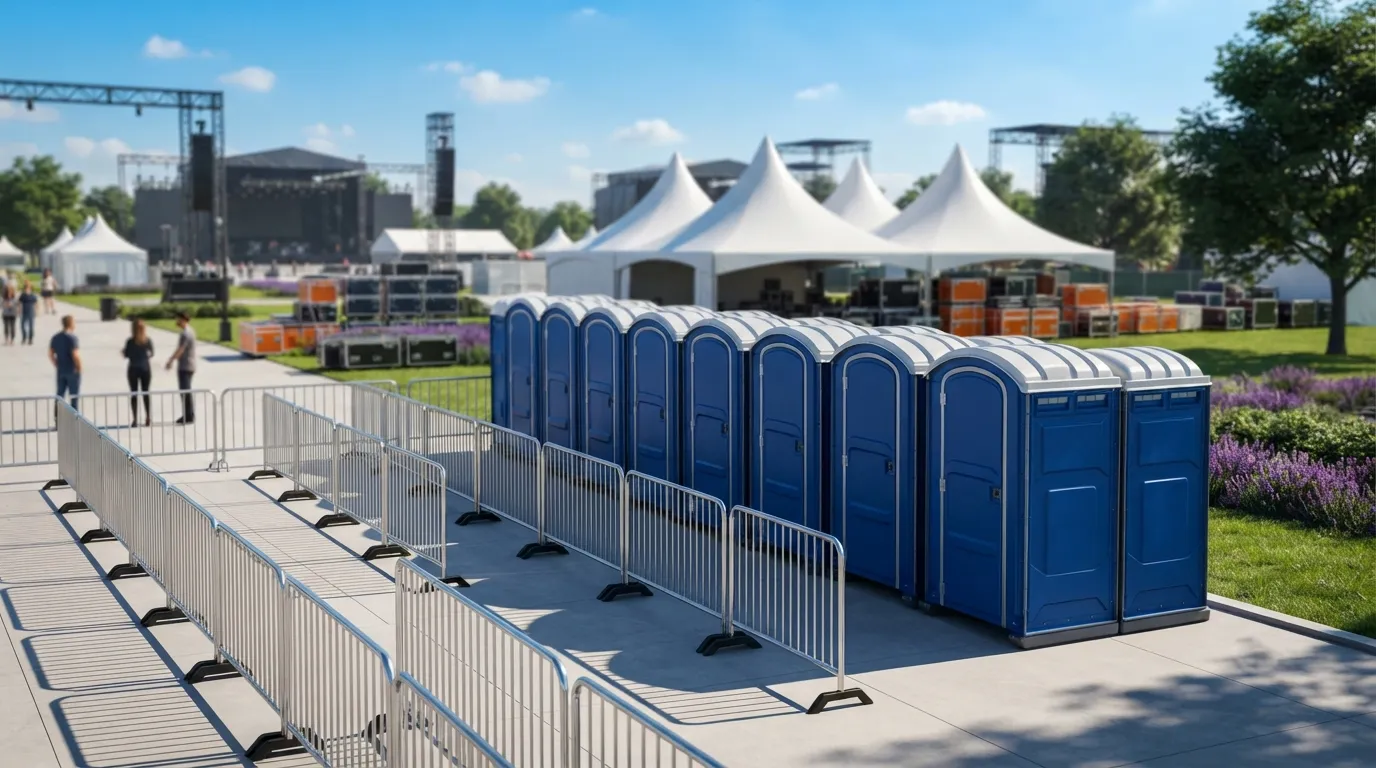
The unit is a self-contained box. Waste drops into the tank, chemical treatment goes to work on it, and a vent pipe carries gas up and out instead of into the stall. No electricity, no sewer hookup, nothing to hook up at all. That's the whole appeal for a construction crew or a backyard wedding: you drop it where you need it and walk away. A standard porta potty rental stands about 92 inches tall and measures roughly 44 by 48 inches on the ground, small enough to tuck beside a fence line or a dumpster pad. For a construction worker on a Garden Grove job site, that box is often the closest facility for hours at a time, which is why placement near the actual work area matters more than people think. Check our porta potty placement guide before delivery day. OSHA 1926.51(c) sets the toilet count for job sites: one unit for 20 workers or fewer, scaling up from there. If you're not sure how many you need, the how many porta potties do I need page walks through it, and our OSHA portable toilet requirements page covers the full ratio table.
How do flushable porta potties work?
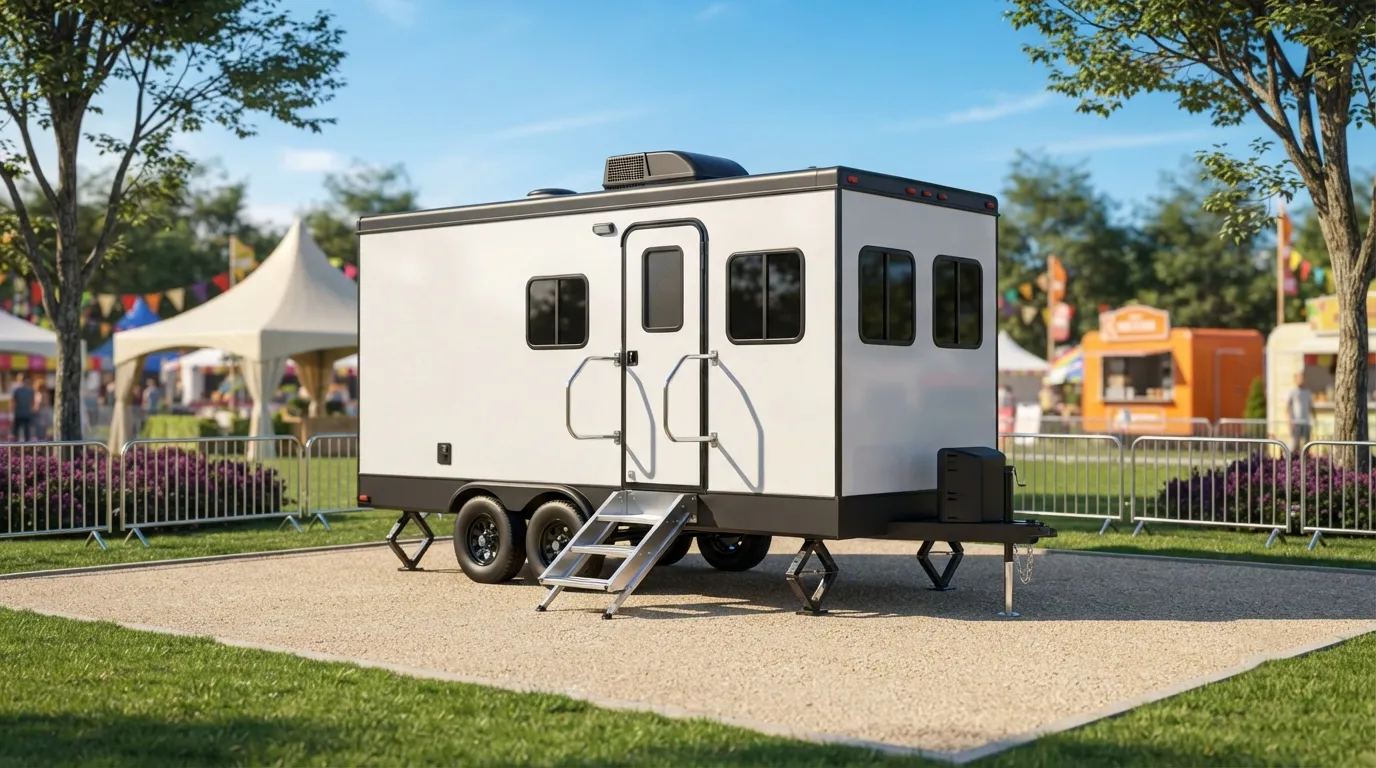
A deluxe flushable unit uses a small onboard freshwater tank and a hand pump or foot pump to push a rinse of water through the bowl after each use, instead of relying on chemical breakdown alone. It still drains to the same sealed holding tank underneath, but the bowl stays cleaner between services and there's less odor buildup. A deluxe flushable porta potty usually includes a sink or hand sanitizer dispenser too. For events where guests expect something closer to a real bathroom, like a backyard reception, this is the step up from a standard porta potty rental. Pricing runs higher than a standard day rate. If you're weighing a flushable unit against a full restroom trailer rental, the difference usually comes down to guest count and budget. Ours serve Garden Grove events along with drops in Stanton, 3.8 miles northwest, and Cypress, 7.3 miles northwest.
How does a portable sink work?
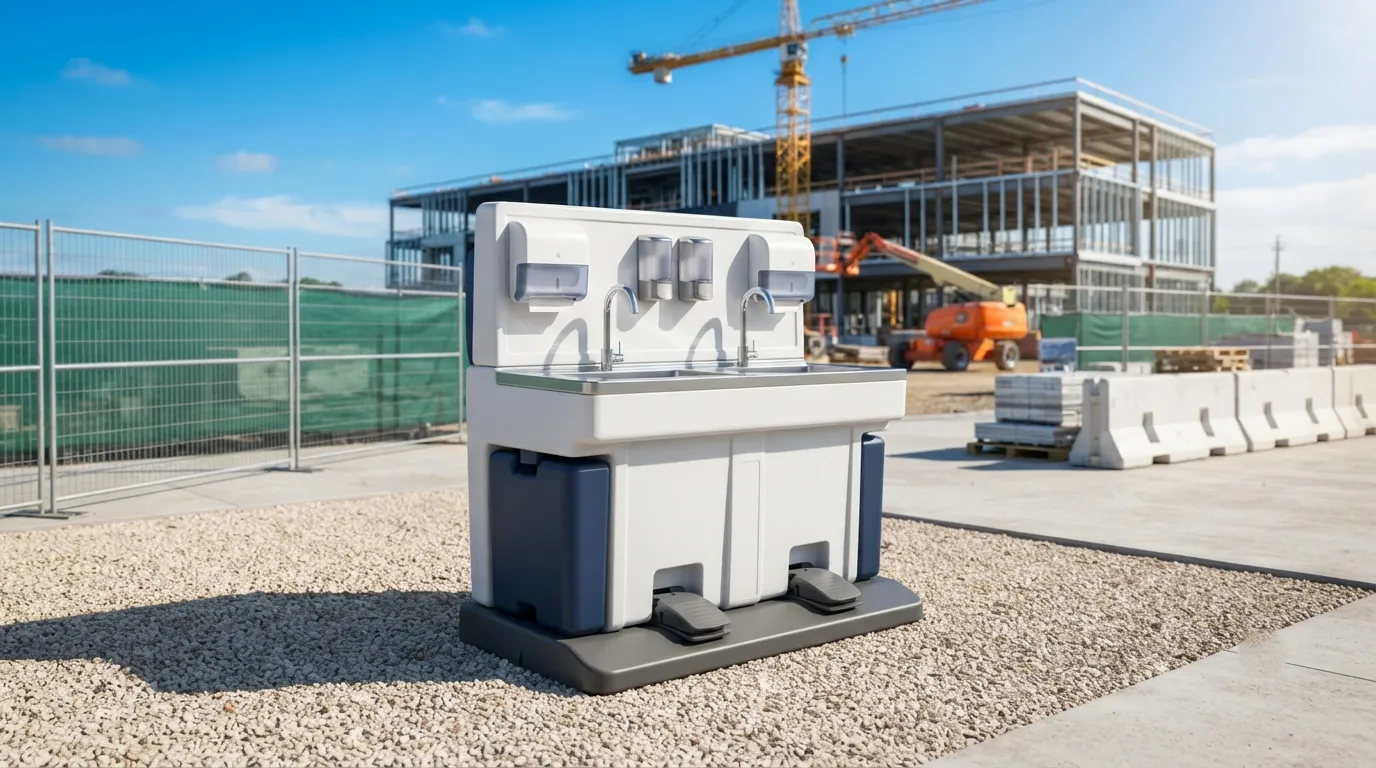
A portable handwashing station holds fresh water in a tank on top, gravity-feeds or foot-pumps it through a spigot, and catches the gray water in a tank below so nothing drains onto the ground. Soap dispensers are built in. 29 CFR 1910.141(d)(2) requires soap and towels or a hand-drying device at washing facilities; hand sanitizer alone doesn't meet that standard, which is why a real handwashing station rental matters on food service or medical job sites. If your crew is spraying paint, coatings, herbicides or insecticides, OSHA 1926.51(f)(1) requires washing facilities for that contaminant exposure specifically, not just general cleanup. A portable sink rental pairs well with any restroom order, and if you only need sanitizer stations for a low-traffic event, we also stock a hand sanitizer station rental. See handwashing requirements for the full breakdown by site type.
What chemicals go in a porta potty?
The blue liquid in the tank is a deodorizer and enzyme treatment that breaks down solid waste and knocks back ammonia smell between services. It's not the same product used in septic tank cleaning; a residential septic system relies on bacteria to digest waste naturally, and adding harsh septic tank cleaning chemicals can actually kill the bacteria a tank depends on. That's a separate system entirely from a rented unit. A typical residential septic tank gets pumped every 3 to 5 years depending on tank size and household size, a service we cover on septic pumping service and how often to pump a septic tank. Restaurants and commercial kitchens run a different schedule: a grease interceptor needs pumping once fats, oils, grease and solids reach 25 percent of the liquid depth, covered on our grease trap pumping page. If you're weighing rental against ownership for a remote site, a holding tank rental skips the chemical question altogether since it's just storage until pump-out.
Camping units work the same basic way as a job site unit, just scaled down and often lighter for towing, which is worth knowing before you rent for a weekend trip; see camping porta potty for details. For accessible placement, ADA Standards 213.2 requires at least 5 percent of clustered single-user units to be accessible, and our ADA accessible porta potty units meet the 60 inch turning circle called for under ADA Standards 304.3.1. Garden Grove renters comparing options can also check porta potty rental cost or porta potty rental per day for current pricing.
FAQ
Do porta potties smell?
Some odor is normal, especially in heat, but a well-serviced unit shouldn't be overwhelming. Chemical treatment and regular pump-outs control it. ANSI/PSAI Z4.3 sets a baseline of one service visit per week for up to 10 users over a 40 hour week. See do porta potties smell for more.
How often are porta potties cleaned?
Standard service is weekly under the ANSI/PSAI Z4.3 baseline, but high-traffic construction sites or multi-day events often need more frequent visits. Garden Grove Porta Pros schedules around actual usage, not just a fixed calendar. Full details on how often are porta potties cleaned.
What is a porta potty tank made of?
The holding tank is sealed plastic, built to contain 60 to 70 gallons of waste and chemical treatment without leaking during transport or use. It sits below the seat and connects to nothing else. Delivery and pickup handle the pumping.
Can I rent a porta potty for just one day?
Yes. Day rates exist for exactly this. Check porta potty rental per day for current pricing, and note that weekend and week rates work differently since longer terms don't cost less per day.
Do I need a permit to place a porta potty in Garden Grove?
Placement in the public right of way needs confirming with the city before delivery. We don't guess at code numbers here. Ask us directly or see porta potty permit requirements before your event date.
Next step
Get a delivery date
Tell us the address, the dates and the headcount. We size the order and confirm the route.