How many toilets do I need for my construction site?
OSHA 1926.51(c)(1) sets the baseline: one toilet facility per 20 workers or fewer, then one toilet seat and one urinal per 40 workers from 20 up to 200, and one toilet seat and one urinal per 50 workers at 200 or more. Your count depends on crew size and shift length. A 30-person crew needs at least two units. A 100-person site needs three. Call us with your headcount and we'll spec the right mix. Check our guide on how many porta potties you need for more detail on safety compliance.
What's the difference between standard and deluxe portable toilets?
A standard unit is about 44 by 48 inches on the ground and holds 60 to 70 gallons. It's the workhorse on job sites. A deluxe flushable toilet offers the same footprint but adds a real flush, running water, and a hand sanitizer dispenser. Both are serviced weekly as baseline under ANSI/PSAI Z4.3. Deluxe units cost more per day but feel like real bathrooms. See deluxe flushable porta potty options in Garden Grove.
Do I need ADA accessible toilets?
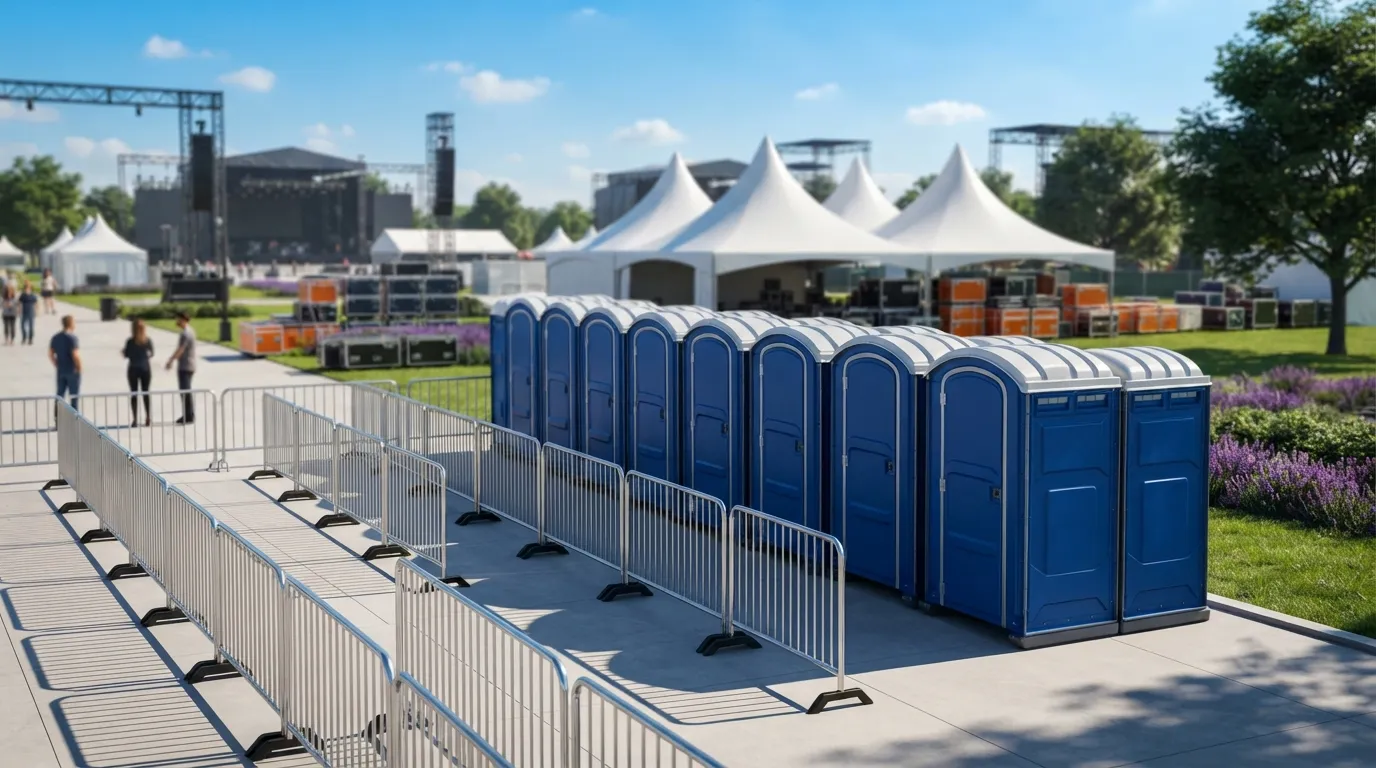
Yes, if your site or event includes public access or hosts employees with disabilities. ADA Standards section 213.2 says that where single-user portable toilet units are clustered, at least 5 percent, and never fewer than one unit, must be accessible. An accessible unit needs a 36-inch clear width route, a 32-inch clear door opening, and a 60-inch diameter turning circle per ADA Standards sections 403.5.1, 404.2.3 and 304.3.1. We stock ADA accessible porta potties ready to deploy, priced around $230 per day.
How often are portable toilets serviced?
Standard service is once per week for up to 10 users over a 40-hour week, per ANSI/PSAI Z4.3. High-traffic events need twice-weekly service or daily pumping. We haul waste, restock toilet paper and soap, and sanitize the interior. Read our post on how often porta potties are cleaned to match service frequency to your actual use.
What about handwashing requirements on construction sites?
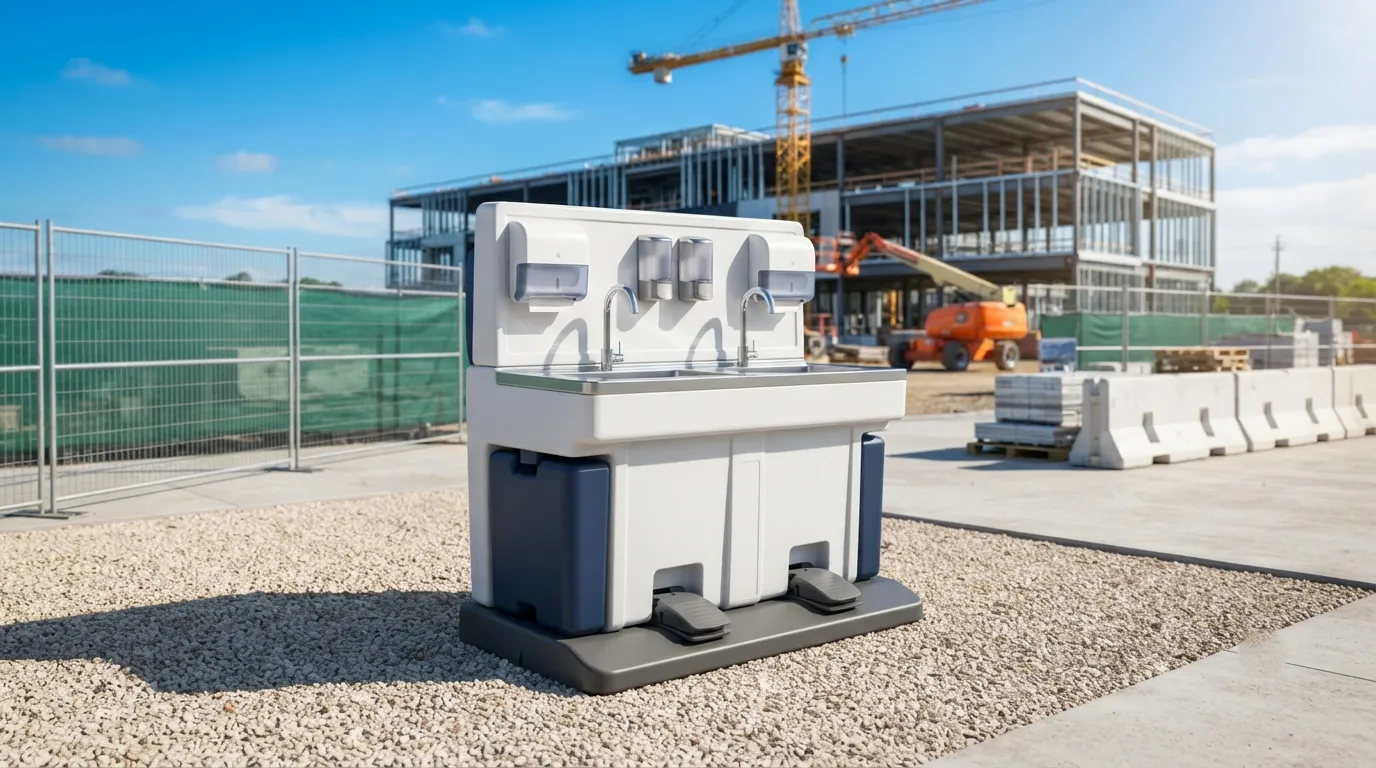
OSHA 1926.51(a)(1) requires an adequate supply of potable water at all places of employment. If your crew handles paints, coatings, herbicides or insecticides, OSHA 1926.51(f)(1) mandates washing facilities with soap and water. 29 CFR 1910.141(d)(2) says soap and towels or a hand dryer satisfy this, hand sanitiser alone does not. Job sites often pair a standard toilet with a handwashing station for compliance. We stock portable sinks with foot pumps, hot water heaters and soap dispensers.
Can I rent a porta potty for just one day?
Yes. Daily rental rates start around $150 for a standard unit. Weekend rates run higher. Call for a quote on your specific dates and location in Garden Grove. We deliver and pick up same-day when the schedule allows.
What if my septic tank backs up on a weekend?
Call us. We run emergency septic service seven days a week. A residential septic tank is typically pumped every 3 to 5 years, but tree roots, grease buildup, or a sudden spike in use can force an urgent call. Weekend pumping costs more than weekday service, but we'll get a truck to you.
Do you deliver to the whole Garden Grove area?
Yes. We're based in Garden Grove and serve the city and nearby towns like Stanton, Midway City, and Cypress. A roll-off delivery needs about 60 feet of straight clearance behind the truck. Confirm your site access before booking.
What can't go in a rental dumpster?
Hazardous waste, asbestos, tires, batteries, paint and propane tanks are banned. Check our page on what cannot go in a dumpster for the full list. Overfilled or contaminated loads carry extra fees.
How much does a grease trap pumping cost?
Pricing depends on tank size and how full it is. A grease interceptor is pumped when fats, oils, grease and solids reach 25 percent of the liquid depth. Most commercial kitchens in Garden Grove pump quarterly. Contact us for a site visit and quote. See grease trap pumping for details.
Next step
Get a delivery date
Tell us the address, the dates and the headcount. We size the order and confirm the route.