
How many porta potties do I need under OSHA rules?
Start with the crew count. OSHA 1926.51(c) says 20 workers or fewer needs just one toilet facility. Cross 20 workers and the math shifts to one toilet seat and one urinal per 40 people, and at 200 or more workers the ratio eases to one seat and one urinal per 50. That's the federal floor, not a suggestion. A 45-person framing crew in Garden Grove needs two toilet facilities, not one, and most job supers round up rather than sit right at the line. Our how many porta potties do I need guide walks through mixed-shift and multi-trade jobs where the count gets murkier. For office trailers or yard staff working outside a construction classification, the ratio comes from 1910.141(c)(1)(i) instead, which is the general industry standard, not the construction one. Mixing those two up is the most common mistake we see on permit paperwork. If your project also needs temporary fencing around the restroom cluster or a storage container for tools, plan the layout together so delivery trucks aren't fighting for the same gate.
What does Cal OSHA require beyond the federal minimum?
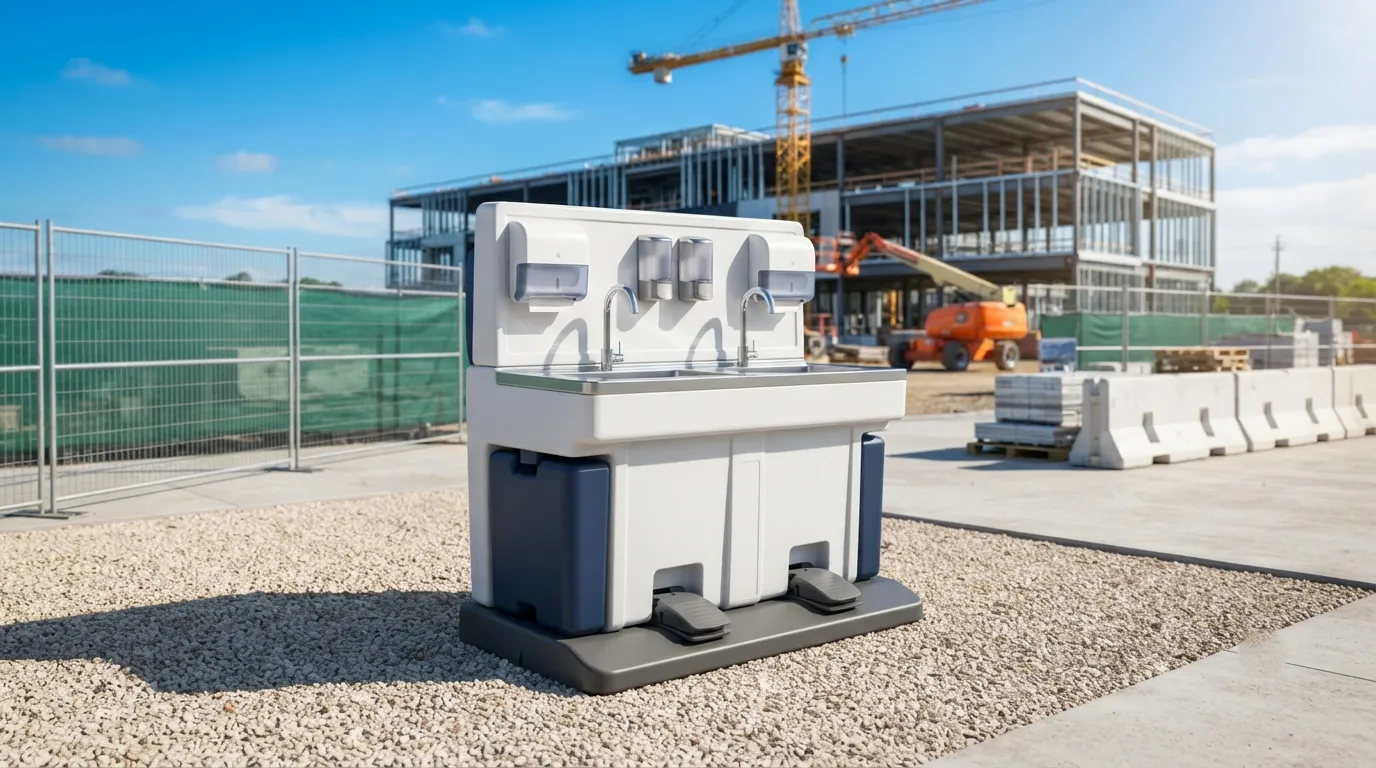
California enforces through Cal/OSHA, and the practical construction requirement tracks the same 1926.51(c) ratios most contractors already build schedules around. What changes state to state is inspection frequency and paperwork, not the seat count itself. Cal OSHA portable toilet requirements construction jobs must also meet 1926.51(a)(1), which requires an adequate supply of potable water at every place of employment, so a restroom without a working handwash setup fails the standard even if the toilet count is right. That's where handwashing station rental or a simple portable sink rental closes the gap cheaply. Pair that with 29 CFR 1910.141(d)(2), which requires soap and a towel or hand-drying device at wash stations, since hand sanitizer alone does not satisfy it. Crews doing paint, coatings, herbicide or insecticide work trigger a separate rule, 1926.51(f)(1), which specifically requires washing facilities for those contaminant exposures. Garden Grove renovation crews spraying finish coats should read that one closely; general job-site handwashing does not need it, only contaminant work does.
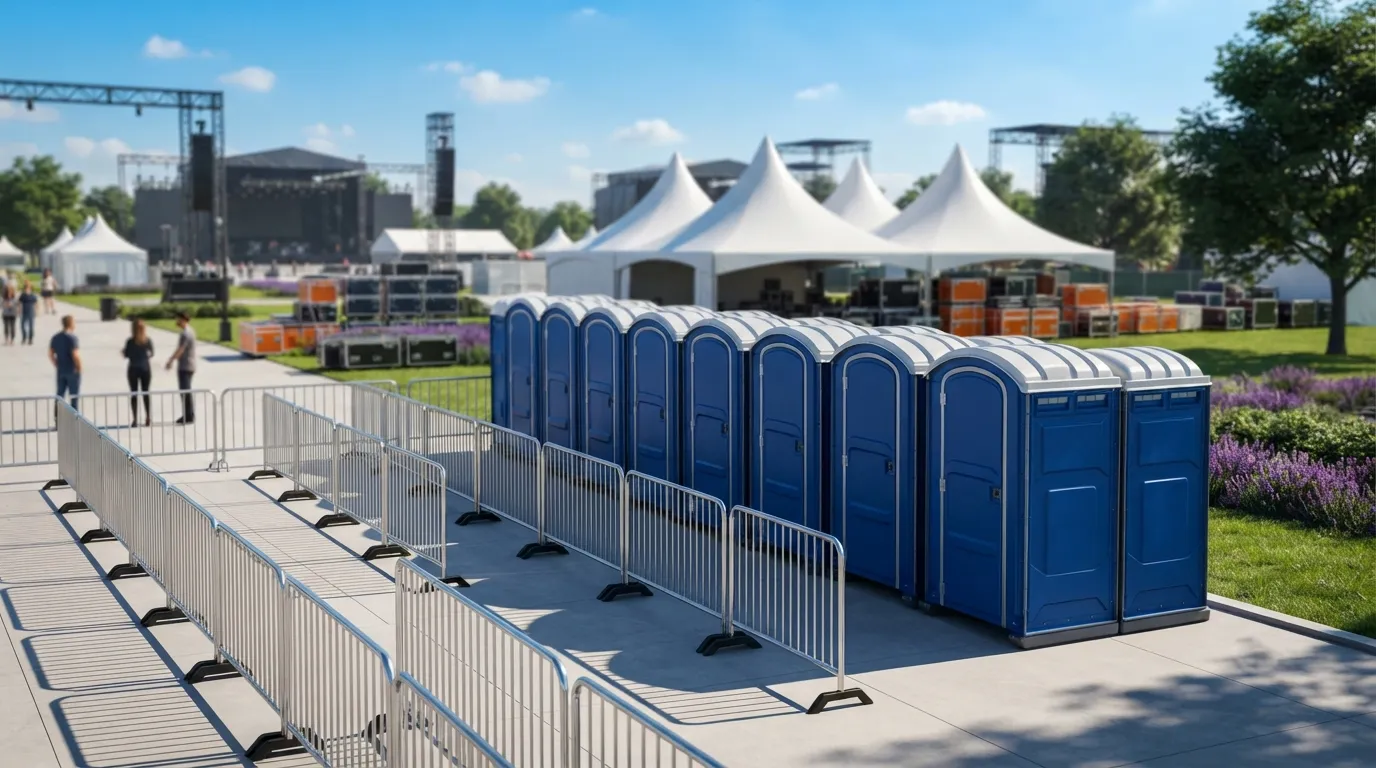
Are there OSHA portable toilet distance requirements from the work area?
OSHA doesn't publish a hard footage number for restroom placement, which surprises a lot of supers looking for a clean answer. The standard focuses on ratio and access, not a specific distance in feet. What does carry hard numbers is accessibility: ADA Standards 213.2 requires that where portable units are clustered, at least 5 percent, and never fewer than one unit, be an accessible model. That accessible unit needs a 36 inch clear route under ADA 403.5.1, a 32 inch door opening under 404.2.3, and a 60 inch turning circle inside per 304.3.1. Our ADA accessible porta potty units meet those figures, and the ADA restroom requirements page breaks down placement logic for tight urban lots common in Garden Grove. For agricultural operations, field sanitation falls under a different rule entirely: 1928.110 requires one facility per 20 hand-labor employees, reachable within a quarter mile walk, which matters for farm and agricultural restrooms work outside the city proper. Placement in the public right of way still needs confirming with the city directly; we don't guess on that one.
Do OSHA rules cover storage containers and dumpsters on site?
Not directly for headcount, but adjacent OSHA rules shape how a jobsite gets laid out around the restrooms. 1926.25 requires scrap and debris cleared from work areas, which is why most Garden Grove contractors pair a roll-off dumpster rental with their toilet order from day one rather than scrambling later. 1926.252 covers waste disposal chutes and enclosures on multi-story jobs. Storage container rental in Garden Grove, or storage container rental in a neighboring yard like Cypress 7.3 miles northwest, often gets bundled with sanitation on the same delivery run to save a trip. If your site runs power tools near the wash station, 1926.404(b)(1)(ii) requires GFCI protection, worth checking before you plug in a handwashing station with a powered pump. Lighting matters too: 1926.56(a) sets minimum illumination for construction areas, relevant if your restroom bank sits in a dim corner of the lot. None of these replace the toilet ratio, they just surround it.
| unit | day | week | month |
|---|---|---|---|
| standard | $100 - $350 | $130 - $500 | $125 - $325 |
| ada | $200 - $400 | $240 - $400 | - |
| deluxe | $85 - $1200 | $150 - $290 | - |
How many workers trigger a second porta potty under OSHA?
Once you pass 20 workers, OSHA 1926.51(c) requires a second toilet facility plus a urinal, scaling at one pair per 40 employees. A 25-person crew already needs two facilities. Check our standard porta potty rental options before the crew size grows past your current order.
Does Cal OSHA require handwashing stations separate from toilets?
Yes when contaminants are involved. 1926.51(f)(1) requires washing facilities specifically for paint, coatings, herbicide or insecticide work. General job sites still need potable water under 1926.51(a)(1). A handwashing station rental covers both situations cleanly.
What OSHA rule applies to office trailers instead of construction sites?
Office and non-construction workplaces fall under 1910.141(c)(1)(i), a different ratio table than the construction standard. If your Garden Grove project mixes field crews and office staff, you may need both counts calculated separately.
Can one ADA unit satisfy a cluster of ten porta potties?
Yes, ADA Standards 213.2 requires 5 percent accessible, and never fewer than one, so a ten-unit cluster needs exactly one ADA-compliant unit. See ADA accessible porta potty for spec details.
Do OSHA rules specify porta potty rental oshawa style monthly terms?
OSHA sets ratios and hygiene rules, not rental terms. Monthly rental length is a business decision; check monthly porta potty rental in Garden Grove for term options and pricing.
Next step
Get a delivery date
Tell us the address, the dates and the headcount. We size the order and confirm the route.