How many restrooms does a race route need?
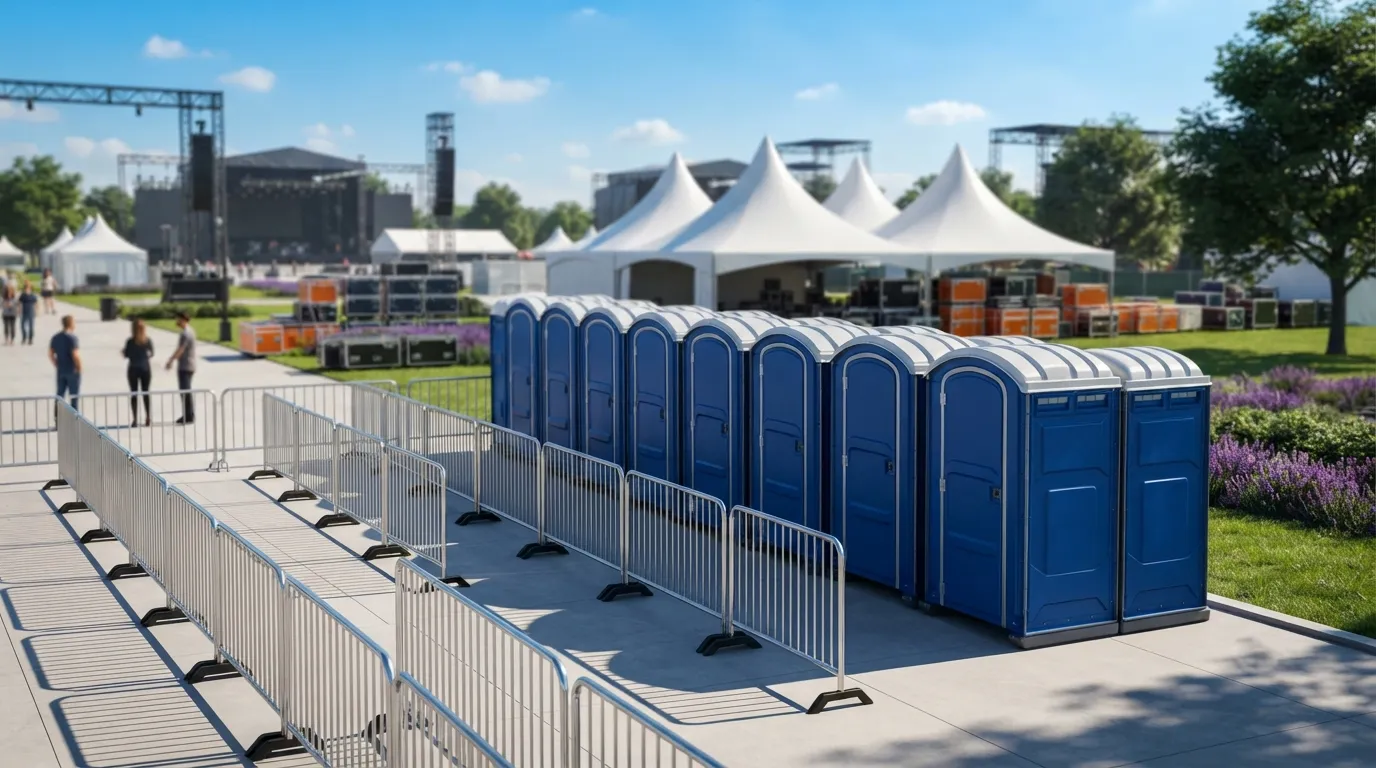
Course restrooms follow the crowd, not the mile markers. A 5K with 400 runners starting and finishing at the same park needs a different layout than a half marathon threading through Garden Grove neighborhoods with runners spread over two hours. We start with standard porta potty rental units at 100 to 150 feet from the busiest corrals, then thin them out along the back half of the course where the field spreads naturally. OSHA 1926.51(c) sets the baseline ratio for worksite crews, and race organizers use the same logic: one seat for roughly every 20 to 40 people packed into a start corral, fewer once runners disperse. Aid stations at mile 3, 6 and 9 usually need one or two units each, and the finish line area needs the heaviest cluster because finishers linger. For events that also draw spectators, check our event restroom rental guide, and for the full math behind field size, see how many porta potties do I need. Races with a fee-paying VIP tent often add a deluxe flushable porta potty or two near sponsor areas. We also handle festival restroom rental style layouts when a race shares a venue with vendor booths.
What do ADA and accessibility rules require for a race?
Every cluster of standard units needs at least one accessible unit under ADA Standards 213.2, which requires 5 percent of a cluster to be accessible and never fewer than one. That means even a small water-stop cluster of three units at mile 6 needs an ADA accessible porta potty sitting right beside it, not held back at a distant staging lot. ADA Standards 405.2 caps ramp slope at 1:12, so we set units on level ground or bring a ramp pad where the course crosses a curb cut. ADA Standards 304.3.1 calls for a 60 inch turning circle inside the unit, and 404.2.3 sets the minimum door opening at 32 inches, both built into the units we stage. Race organizers in Garden Grove sometimes ask whether spectator zones need the same ratio as runner aid stations; they do, since ADA Standards apply to fixed clusters regardless of who is using them. If your race also needs a real facility for VIP or media, look at our restroom trailer rental options, including the 2 stall restroom trailer for smaller press areas and the 4 stall restroom trailer for larger ones. For the general rulebook, our ADA restroom requirements page covers placement details beyond race day.
How do you power lighting and signage along a dark course?
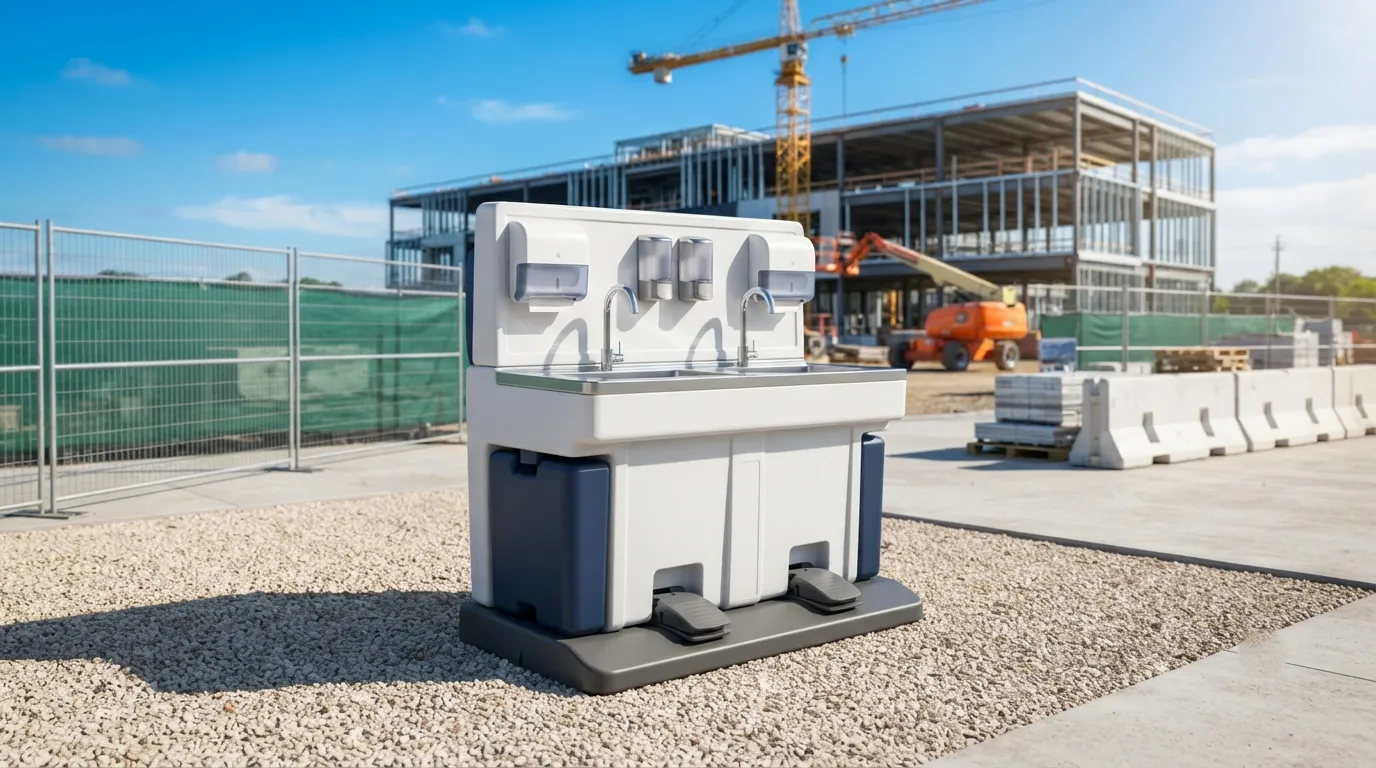
Early morning starts and evening finish lines need light towers and sometimes a temporary power pole for timing equipment, PA systems or a finish-line arch. If you're running a generator-fed light tower near a curb or a gravel shoulder, the pole needs a stable base and guy lines set at a wide enough angle to resist wind gusts pulling on banners or lighting rigs; staking the base plate into firm ground and tensioning at least three guy points is the standard field method for how to brace a temporary power pole on uneven race-day terrain. We stage light tower rental units at start corrals and dark mile stretches, and pair them with a temporary power pole for timing tents that need real amperage rather than a battery pack. Course marshals also lean on temporary fence rental to keep runners routed correctly at turns, and a chain link temporary fence works well around staging areas holding water jugs and medical supplies. Crowd control barrier rental helps at the finish chute; see crowd control barrier rental for options. Runners handling gel packets and sports drink stations benefit from a rinse point too, and OSHA 1926.51(a)(1) calls for an adequate supply of potable water at any staffed work location, which covers volunteer aid stations as well as runners.
Delivery logistics matter as much as unit count. A porta potty rental per day arrangement works for single-day races, while multi-day events like a stage race or a festival weekend pair better with our porta potty rental cost breakdown for weekend pricing. Garden Grove race organizers close to Stanton, 3.8 miles northwest, or Cypress, 7.3 miles northwest, sometimes stage overflow parking and satellite restrooms in those cities; we cover porta potty rental in Stanton, CA and porta potty rental in Cypress, CA for courses that cross city lines. Midway City, 4.3 miles southwest, comes up for races routed along the county line, and our porta potty rental in Midway City, CA page has that coverage. For a broader look at every service we run for organized events, our construction site services page also lists dumpster and fencing add-ons useful for race-day cleanup crews, and a roll-off dumpster rental at the finish festival area keeps trash off the course. If you want the full page for this metro, start at porta potty rental in Garden Grove, CA.
How many porta potties do we need for a 500-runner 5K?
Plan on roughly two units per 500 runners at the start corral alone, plus one accessible unit per cluster under ADA Standards 213.2. Add units at any aid station past mile 2. Spread finishers linger longer than starters, so the finish area usually needs more than the start.
Can we get restrooms delivered before a 6am race start?
Yes, early delivery is standard for race events. Tell us your gate-open time when you book so delivery lands with buffer room before volunteers arrive to stage signage and water tables.
Do we need an accessible unit at every aid station, or just the start?
Every cluster needs one, not just the start. ADA Standards 213.2 applies per cluster, so a three-unit mile-6 water stop needs its own accessible unit standing right beside it.
What size restroom trailer works for a race with VIP or sponsor tents?
A 2 stall unit handles most sponsor tents; larger sponsor villages or media rows often need a 4 stall or 8 stall trailer. See 8 stall restroom trailer for bigger finish-line footprints.
Who handles trash and fencing along the course besides restrooms?
We do. Roll-off dumpsters at the finish festival, chain link fence at staging corrals and crowd barrier at the chute all book through the same call as your restroom order.
Next step
Get a delivery date
Tell us the address, the dates and the headcount. We size the order and confirm the route.