How many porta potties do I need?
Start with headcount and duration, then check it against how many porta potties you need for the full breakdown. OSHA 1926.51(c) sets the construction baseline: one toilet for 20 workers or fewer, then one toilet seat and one urinal per 40 workers once you pass 20, dropping to one per 50 once you hit 200 workers. ANSI/PSAI Z4.3 uses a different lens for events, a baseline of one service visit per week covering up to 10 users over a 40 hour week, which is why long weekend rentals in Garden Grove often need a mid-event service call built in. If you are running an agricultural crew instead of a job site, OSHA 1928.110 applies instead: one facility per 20 hand-labor employees, positioned within a quarter mile walk. Choose between a standard porta potty rental for daily job site use or a deluxe flushable porta potty if the crew or guest list expects better.
What size crew or event needs an ADA unit?
Any cluster of single-user portable toilets needs at least one accessible unit under ADA Standards 213.2, and that rule never drops to zero no matter how small the cluster is. An ADA accessible porta potty has to clear a 60 inch turning circle per ADA Standards 304.3.1, keep its door opening at least 32 inches wide under ADA Standards 404.2.3, and sit on stable, firm, slip resistant ground per ADA Standards 302.1. The access route leading to it needs 36 inches of clear width, per ADA Standards 403.5.1. Check the full spec list against ADA restroom requirements before you finalize a site plan for a wedding, festival, or construction project in Garden Grove. Weddings and formal events in particular tend to need this dialed in early; see wedding restroom rental for how that pairs with a standard unit order.
Where should units be placed on site?
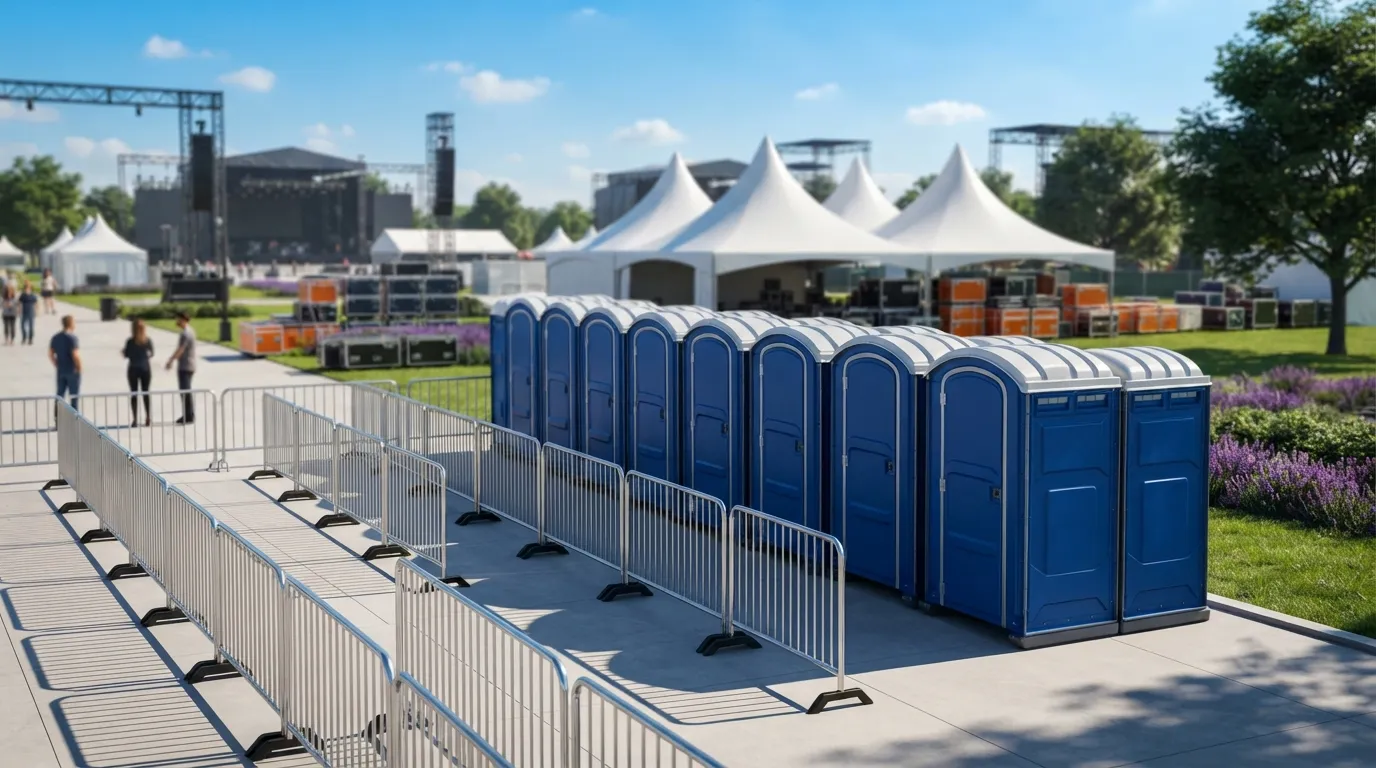
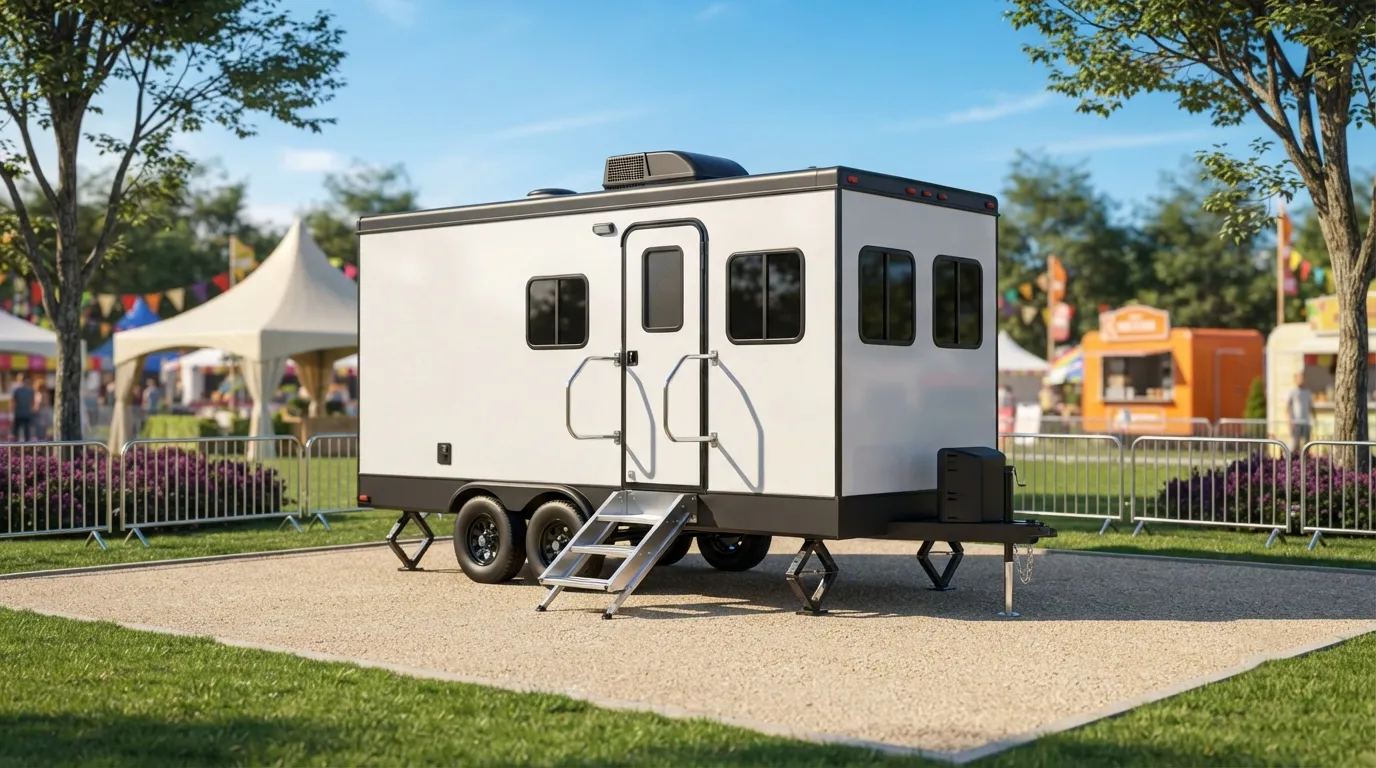
Placement decides whether your rental works or becomes a daily headache. A standard unit runs about 44 by 48 inches on the ground and stands roughly 92 inches tall, so measure the pad before delivery day, not after the truck shows up. Ground has to be level and stable, matching the same firm-surface logic ADA Standards 302.1 requires for accessible units. If you are bringing in a restroom trailer rental instead of standalone units, plan for real vehicle access: a roll-off delivery alone needs about 60 feet of straight clearance behind the truck, and trailers need comparable room to back in and level. Keep units clear of soft turf, slopes and low branches. Walk the porta potty placement guide before delivery, and if the job site sits in the public right of way anywhere in Garden Grove, that placement needs confirming with the city directly, since we cannot cite a specific local ordinance here. Lighting matters too on multi-day builds; OSHA 1926.56(a) sets minimum illumination levels for construction areas, which affects where you stage units relative to job site lighting.
Do I need handwashing stations too?
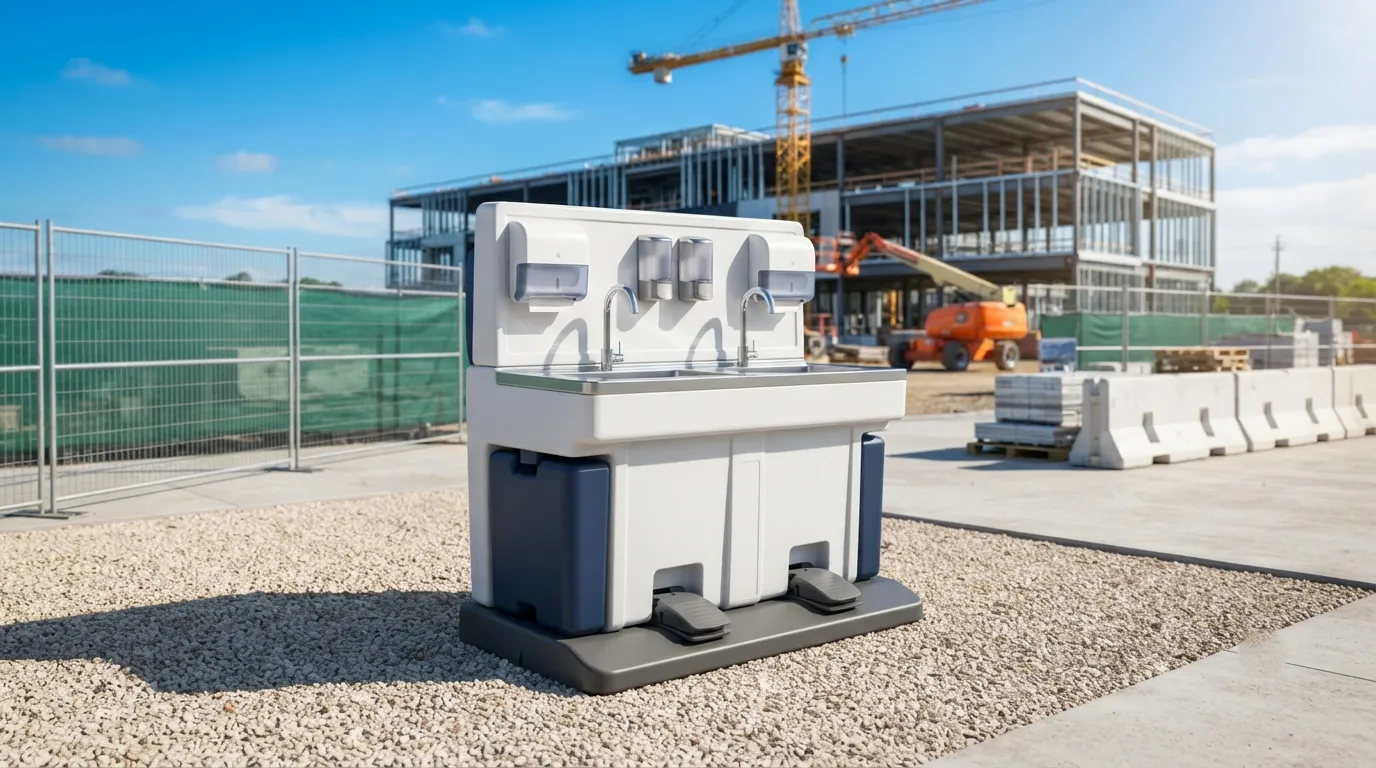
Yes, if anyone is applying paint, coatings, herbicides or insecticides on site, since OSHA 1926.51(f)(1) specifically requires washing facilities for those contaminant tasks. Beyond that trigger, 29 CFR 1910.141(d)(2) requires soap and towels or a hand-drying device at any washing facility. Hand sanitizer alone does not satisfy that. A standalone handwashing station rental or a portable sink rental covers this cleanly, and OSHA 1926.51(a)(1) requires an adequate supply of potable water at any place of employment regardless of unit type. Review the full breakdown at handwashing station requirements before your Garden Grove crew starts a coating or pesticide job. For general industry sites rather than construction, the toilet ratio comes from 1910.141(c)(1)(i), not the construction table.
What else belongs on the checklist?
Confirm delivery access, waste plan and standing water controls before the truck arrives. If the project also generates debris, pair your restroom order with a roll-off dumpster rental, keeping OSHA 1926.25 housekeeping rules and OSHA 1926.252 waste disposal rules in mind for anything routed through chutes. Sites with barricades or crowd control need to check OSHA 1926.202, which requires barricades to meet ANSI D6.1. If you are also running temporary power, GFCI protection under OSHA 1926.404(b)(1)(ii) applies to construction circuits near your restroom or wash station area. For septic-served properties nearby, a typical 1,000 gallon residential tank gets pumped every 3 to 5 years depending on household size and tank size, worth checking against how often to pump a septic tank if your job touches an existing system. Garden Grove sites near Stanton, 3.8 miles northwest, or Midway City, 4.3 miles southwest, sometimes combine restroom and dumpster orders on one delivery run to save a trip.
| unit | duration | typical price |
|---|---|---|
| standard | day | $150 |
| standard | week | $200 |
| ada | day | $230 |
| deluxe | week | $250 |
Pull full detail from porta potty rental cost or monthly porta potty rental if the job runs long. This page belongs to porta potty rental in Garden Grove, CA, the hub for everything else on this site.
How far in advance should I book?
Book standard units at least a few days out and ADA or trailer units earlier, since ADA and deluxe inventory is thinner. Weekend and event dates in Garden Grove fill first. If you are pinned to a tight date, call and ask directly what is available before locking in a plan.
What happens if I underestimate headcount?
You will see lines and faster tank fill on multi-day rentals. ANSI/PSAI Z4.3 assumes 10 users per unit over a 40 hour week, so a bigger crew needs either more units or a faster service cycle. Adjust before day one, not mid-week.
Can I place a unit on the street in Garden Grove?
Right of way placement needs confirming with the city before delivery. We cannot cite a specific Garden Grove ordinance here, so check with the appropriate department directly and get it in writing.
Do porta potties need a level surface?
Yes. Units need firm, stable, slip-resistant ground, the same standard ADA Standards 302.1 sets for accessible routes. Gravel, pavement or packed dirt works. Soft turf or a slope causes tipping risk and service problems.
What is the difference between standard and deluxe units?
A standard unit is a basic non-flushing toilet good for job sites. A deluxe flushable porta potty adds a flush mechanism and often a sink, better suited to weddings, festival restroom rental needs, or extended stays.
Next step
Get a delivery date
Tell us the address, the dates and the headcount. We size the order and confirm the route.